
By Carbon Fusion
Every recycling line starts the same way: bulky, mixed plastic that no extruder or press can use as it is. The shredder is the machine that fixes that.
Quick answer: A plastic shredder machines cuts bottles, containers, films and scrap into small, even flakes so they can be melted, pressed or moulded. Choose one by matching the plastics you collect (HDPE, PP, LDPE and so on), the kilograms per hour you need, the flake size you want and the power you have. Carbon Fusion, a plastic recycling machine manufacturer in Noida, lists shredders from a hand-cranked unit to an industrial single-shaft machine rated at 60 to 80 kg per hour.
What you’ll learn in this article:
- What a plastic shredder machines does and why it comes first
- How HDPE, PP and LDPE differ for shredding
- The main shredder types and where each fits
- How a shredder machines works, step by step
- How to choose one, common mistakes and FAQs
Contents: What it is | Why shredding machines matters | Plastic types | Shredder types | How it works | How to choose | Mistakes and FAQs | Conclusion
Setting up a recycling unit and unsure which shredder to start with? Talk to the Carbon Fusion team about your plastic type and daily volume.
What Is a Plastic Shredder Machine?
A plastic shredder machine uses rotating blades to cut large plastic waste into small, uniform pieces called chips or flakes. It is the first step in most plastic recycling operations, before washing, extrusion, pressing or injection moulding. For the wider picture, see this overview of plastic recycling.
Carbon Fusion’s plastic shredder machine for HDPE, PP and LDPE is described as startup-ready equipment that reduces bottles, containers, films and mixed plastic to chips ready for pressing or extrusion.
Why Shredding Matters in Plastic Recycling
- Even feed: extruders, sheet presses and injection machines work best with uniform flakes.
- Less volume: shredded plastic takes far less space to store and move.
- Better melting: small pieces heat evenly, which improves the finished product.
- Flexibility: one shredder can feed several machines, such as an industrial extrusion machine or a 1 x 1 meter sheet press.
HDPE, PP and LDPE: What Are You Shredding?
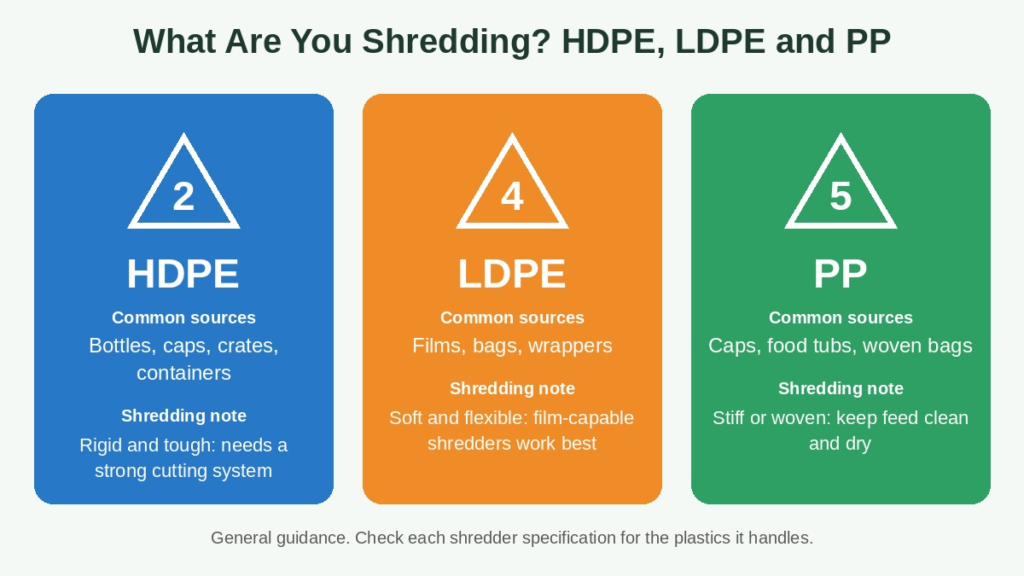
Plastics carry a resin code that tells you what they are. The resin identification code lists HDPE as 2, LDPE as 4 and PP as 5.
| Plastic | Code | Common sources | Shredding notes |
|---|---|---|---|
| HDPE | 2 | Bottles, caps, crates, containers | Rigid and tough, so it needs a strong cutting system |
| LDPE | 4 | Films, bags, wrappers | Soft and flexible; film-capable shredders work best |
| PP | 5 | Caps, food tubs, woven bags | Stiff or woven; keep feed clean and dry |
General guidance. Check each shredder’s specification for the plastics it is built to handle.
Types of Plastic Shredder Machines
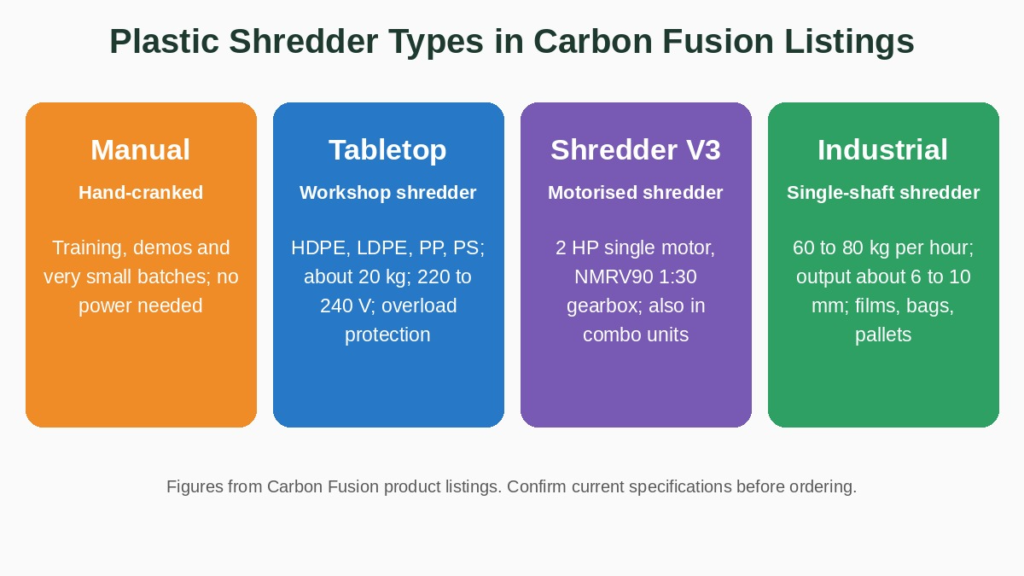
Manual Hand-Cranked Shredders
The manual shredder suits training, demonstrations and very small batches where no power supply is needed.
Tabletop and Workshop Shredders
The tabletop shredder with motor is built for small workshops and community projects. The listing shows HDPE, LDPE, PP and PS as suited plastics, a weight of about 20 kg, 220 to 240 V power, overload protection and an emergency stop button.
Standard Motorised Shredders
Carbon Fusion’s Shredder V3 is listed with a 2 HP single motor and NMRV90 1:30 gearbox, and supports plastics such as HDPE, LDPE, PP, PS, PLA, ABS and TPU. It is also offered inside combo units with a sheet press or injection machine, such as the sheet press and shredder combo.
Industrial Single-Shaft Shredders
A heavy-duty industrial single-shaft shredder is listed at 60 to 80 kg per hour with an output size of about 6 to 10 mm. It is described as suited to plastic scrap such as runners and lumps, pallets, woven and big bags, films and sheets.
Figures come from Carbon Fusion’s product listings. Confirm current specifications before ordering.
How a Plastic Shredder Works: Step by Step
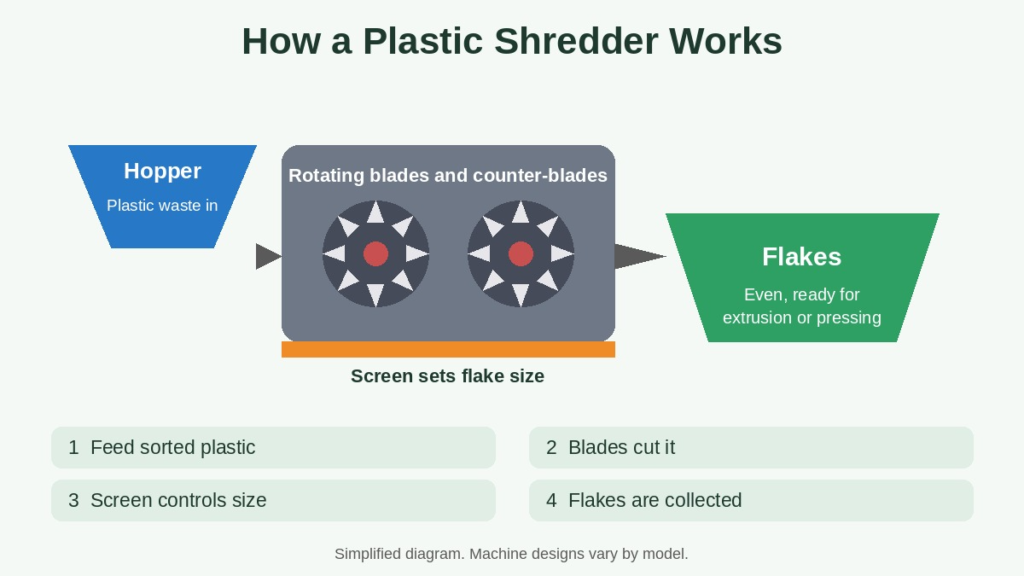
Step 1: Feed the Plastic
Sorted, reasonably clean plastic goes into the hopper. Removing metal, stones and heavy contamination protects the blades.
Step 2: Cut With Rotating Blades
Blades on a rotating shaft (or shafts) grip and cut the plastic against fixed counter-blades. High torque is what lets the machine bite into tough items.
Step 3: Control the Flake Size
A screen or sizing system decides how small the pieces must be before they pass through. Smaller, even flakes feed downstream machines more smoothly.
Step 4: Collect the Flakes
Shredded plastic drops into a collection bin or onto a conveyor, ready for washing, drying and the next process.
How to Choose a Plastic Shredder in 5 Steps
Step 1: List Your Plastics
Write down the plastics you will collect, and whether they are rigid items, film or woven bags.
Step 2: Set Your Hourly Target
Work from the kilograms per hour your extruder or press needs. Your shredder should keep up with the machine it feeds.
Step 3: Decide the Flake Size
Check the output size and whether it can be adjusted for your process.
Step 4: Check Power, Space and Safety
Confirm voltage, phase, floor space and safety features such as overload protection and an emergency stop.
Step 5: Compare Support and Warranty
Ask what the warranty covers, how spare blades are supplied and whether training is included. For example, the tabletop shredder listing mentions 6 months mechanical and 1 year electrical warranty.
Common Mistakes When Buying a Shredder
- Buying for the wrong plastic. A shredder built for rigid items may struggle with film.
- Ignoring downstream machines. Match shredder output to your extruder, press or injection machine.
- Feeding dirty or mixed waste. Metal and grit damage blades and cut output.
- Skipping safety checks. Look for overload protection and emergency stops.
- Choosing on price alone. Compare capacity, build quality and support.
Frequently Asked Questions
What does a plastic shredder do?
It cuts plastic waste into small, even flakes so they can be melted, pressed or moulded.
Can one shredder handle HDPE, PP and LDPE?
Many shredders are listed for all three, but film and rigid plastics behave differently. Check the specification for each plastic you plan to process.
What flake size should I aim for?
It depends on the next machine. Carbon Fusion’s industrial single-shaft listing gives an output size of about 6 to 10 mm.
Do I need to wash plastic before shredding?
Remove metal and heavy dirt before shredding, then wash and dry the flakes before melting for better quality.
Where can I buy plastic recycling machines in Noida?
Carbon Fusion is a plastic recycling machine manufacturer based in Noida. Browse the machine range or contact us to plan your setup.
Conclusion: Start Your Recycling Line With the Right Shredder
The right shredder matches your plastics, hourly target, flake size and power supply, and keeps your extruder or press fed with clean, even material.
Ready to plan? Explore the Carbon Fusion machine range, read about us, or request a quote
