
Before you ask what a plastic sheet pressing machine costs, ask what size it needs to be. The right capacity decides the price, the floor space and how fast you can turn plastic waste into sellable sheets.
Quick answer: A plastic sheet pressing machine heats shredded plastic inside a mould and presses it into a flat sheet. Capacity depends on sheet size and how much plastic each sheet holds. Carbon Fusion’s listings show sheet presses from a 300 x 300 mm mini press to a 1 x 1 meter machine that recycles 14 to 50 kg of plastic per sheet. Price depends mainly on size, heating and pressing system, and automation, so request a written quote for your exact specification.
What you’ll learn in this article:
- What a plastic sheet pressing machine is and how it works, step by step
- How to work out the capacity you need
- What affects plastic sheet pressing machine price
- How Carbon Fusion’s sheet press range compares
- Common buying mistakes, plus FAQs
Contents: What it is | How it works | Capacity | What affects price | Carbon Fusion range | How to choose | Mistakes and FAQs | Conclusion
Need help sizing a sheet press for your project? Talk to the Carbon Fusion team about your plastic type, sheet size and daily target.
What Is a Plastic Sheet Pressing Machine?
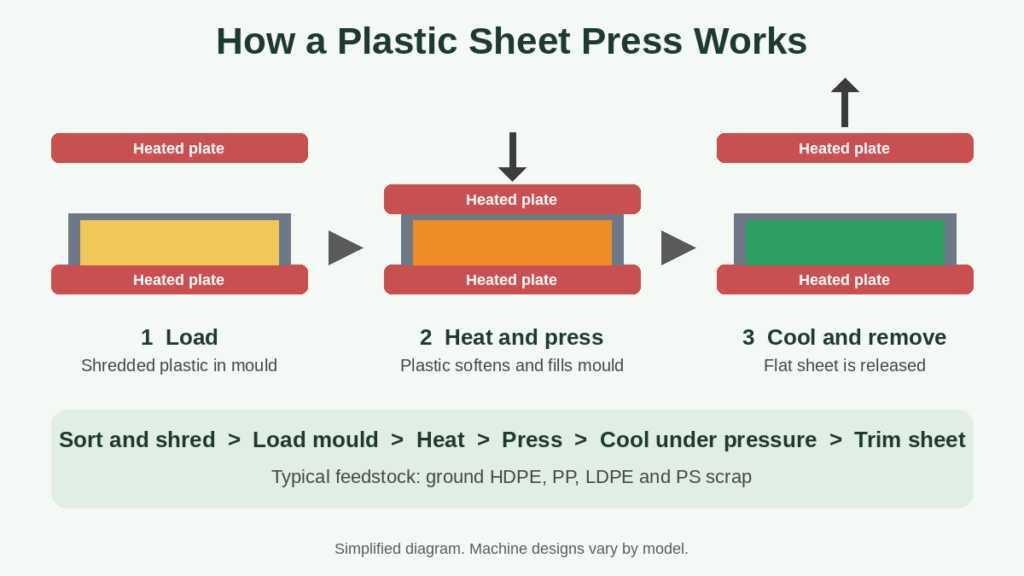
A plastic sheet pressing machine, or sheet press, turns shredded plastic waste into flat, solid sheets. The plastic is loaded into a mould, heated until it softens, then compressed between plates and cooled. This is a form of compression moulding.
The finished sheets are a raw material. Makers cut and shape them into products such as furniture parts, panels, boards and crafted goods. If you want to see how recycled plastic ends up as finished items, browse the sheets and materials category.
How a Plastic Sheet Pressing Machine Works: Step by Step
Step 1: Sort and Shred the Plastic
Plastic is sorted by type and shredded into small flakes. A plastic shredder machine prepares the feedstock. Listed Carbon Fusion sheet presses process ground HDPE, PP, LDPE and PS scrap, and some listings also mention ABS and acrylic.
Step 2: Load the Mould
The flakes are spread evenly in the mould. The amount you load decides sheet thickness and weight.
Step 3: Heat the Plastic
Heating plates raise the temperature until the plastic softens and starts to flow. Even heating matters, because cold spots leave weak areas in the sheet.
Step 4: Press the Sheet
The press applies force so the softened plastic fills the mould and bonds into one piece. Larger machines apply more force over a bigger area.
Step 5: Cool Under Pressure
The sheet cools while still held in shape. Cooling too fast or releasing too early can cause warping.
Step 6: Remove and Trim
The finished sheet is taken out, edges are trimmed and the mould is cleaned for the next batch.
What Capacity Do You Need?
Think in two numbers: how big each sheet is, and how many sheets you can make in a day.
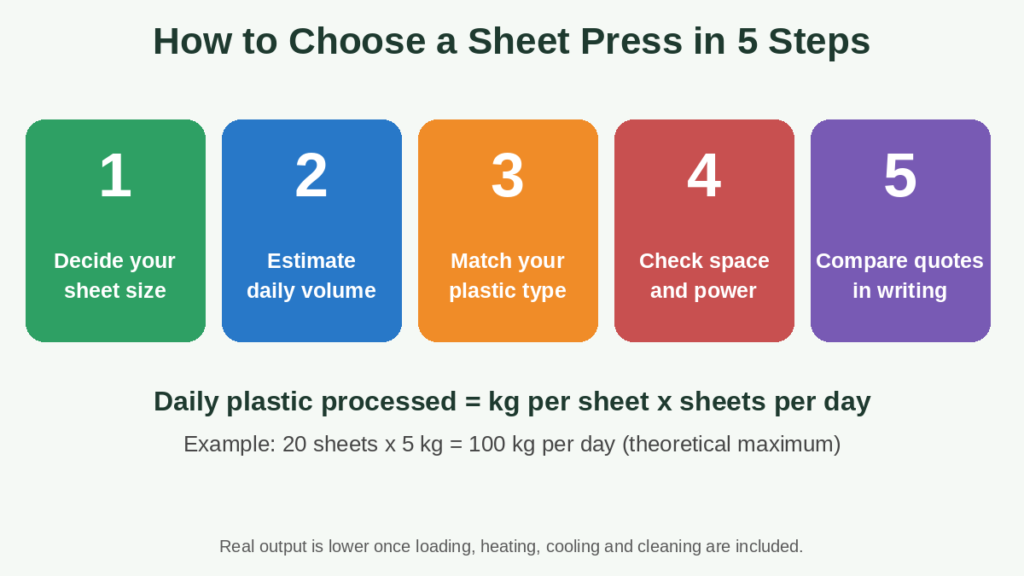
Daily plastic processed = kg of plastic per sheet x sheets per day.
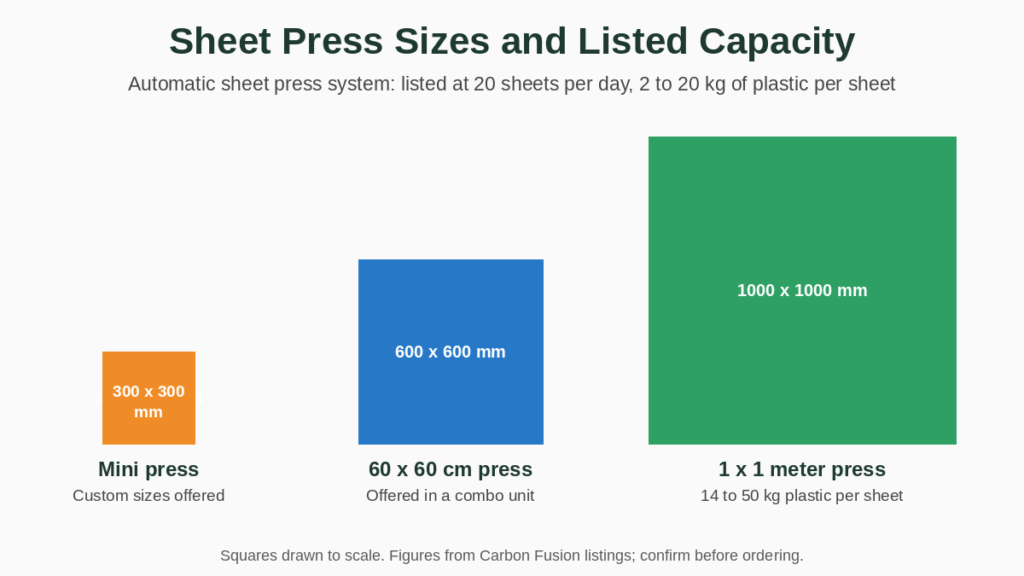
Carbon Fusion’s listings give these reference points:
| Machine | Best for | Listed highlights |
|---|---|---|
| Mini sheet press (300 x 300 mm) | Trials, small products, training | Processes HDPE, PP, PS and LDPE; custom sizes offered |
| 60 x 60 cm sheet press (combo unit) | Small workshops wanting a starter line | Offered with a shredder and injection machine |
| Automatic sheet press system | Steady sheet production | Listed at 20 sheets per day; each sheet recycles 2 to 20 kg of plastic |
| Sheet press 1 x 1 meter | Larger sheets and higher volume | Each sheet recycles 14 to 50 kg of plastic; about 450 kg; 1250 x 2500 x 1000 mm |
Figures come from Carbon Fusion’s product listings. Confirm current specifications before ordering.
Worked example: if a machine makes 20 sheets a day and each holds 5 kg of plastic, the theoretical maximum is 100 kg a day. Real output is lower once you allow for loading, heating, cooling and cleaning time.
What Affects Plastic Sheet Pressing Machine Price?
Price varies widely, so quotes only compare fairly when the specification is the same. The main factors are:
- Sheet size: larger plates, frames and presses cost more to build.
- Heating and pressing system: the power, control and force of the press.
- Automation: automatic systems cost more than manual ones but can save labour.
- Build and materials: frame strength and component quality.
- What is included: moulds, installation, training and shipping.
- Add-ons: a shredder or extruder to complete the line, such as a sheet press and extrusion combo.
Carbon Fusion’s listings mention virtual sessions, technical support, installation help and training after delivery. Ask exactly what your quote includes.
How to Choose a Sheet Press in 5 Steps
Step 1: Decide Your Sheet Size
Match the sheet size to the products you plan to make. Larger sheets cut waste for big items, while smaller sheets suit trials and small goods.
Step 2: Estimate Daily Volume
Use the formula above to work out how many kilograms of plastic you want to process per day.
Step 3: Match Your Plastic Type
Confirm the machine handles the plastics you collect, such as HDPE, PP, LDPE or PS.
Step 4: Check Space and Power
Check floor area, weight, foundation and power supply. The 1 x 1 meter machine, for example, is listed at about 450 kg and 1250 x 2500 x 1000 mm.
Step 5: Compare Quotes in Writing
Ask every supplier for the same details: size, heating, pressing force, automation level, inclusions and support. Browse the Carbon Fusion machine range to compare options.
Common Mistakes When Buying a Sheet Press
- Comparing price without comparing size. A cheaper press may make smaller sheets or fewer per day.
- Overlooking feedstock preparation. Dirty or poorly shredded plastic gives weaker sheets.
- Ignoring power and space. Check site requirements before ordering.
- Forgetting moulds and extras. Moulds, shredders and shipping change the real total.
- Skipping training. Pressing times and temperatures take practice to get right.
Frequently Asked Questions
How does a plastic sheet pressing machine work?
It heats shredded plastic in a mould, presses it into a flat sheet and cools it under pressure.
How much plastic does one sheet use?
It depends on size and thickness. Carbon Fusion’s listings quote 2 to 20 kg per sheet for the automatic system and 14 to 50 kg per sheet for the 1 x 1 meter press.
Which plastics can a sheet press process?
Listed Carbon Fusion sheet presses process recycled HDPE, PP, LDPE and PS scrap in ground form, and some listings also mention ABS and acrylic.
How much does a plastic sheet pressing machine cost?
It depends on size, heating and pressing system, automation and what is included. Request a quote from Carbon Fusion with your sheet size and daily volume.
Do I need a shredder and extruder as well?
You need shredded plastic for the press. A tabletop shredder can prepare it for small setups, and an extruder is optional depending on your products.
Conclusion: Size the Press to Your Output, Then Compare Quotes
A plastic sheet pressing machine works by heating, pressing and cooling shredded plastic into flat sheets. Work out your sheet size and daily volume first, then compare written quotes on the same specification.
Ready to plan? Explore the Carbon Fusion machine range, read about us, or request a quote.
