
By Carbon Fusion
The juice or milk carton in your kitchen looks like paper, but it carries thin layers of plastic and aluminium that keep food safe for months. Those layers are exactly what makes carton recycling interesting, because they can be turned into granules for new products.
Quick answer: Used Tetra Pak cartons are collected and sorted, then soaked and agitated in a process called hydrapulping, which separates the paper fibre from the remaining polyethylene and aluminium. That non-paper part, known as polyAl or PE-AL, can be dried, melted and pelletised into recycled plastic granules. Manufacturers use such granules for items like plastic lumber, pallets, crates, sheets and composite products. Carbon Fusion lists PE-AL granules made from post-consumer Tetra Pak waste.
What you’ll learn in this article:
- What a Tetra Pak carton is made of
- How cartons are recycled, step by step
- What PE-AL granules are used for
- Where carton recycling stands in India
- What to ask before buying recycled plastic granules
Contents: What cartons are made of | Why they need special recycling | How they become granules | Uses | Recycling in India | Buying checklist | FAQs | Conclusion
Looking for recycled plastic granules? Request a quote or see the recycled plastic granules page.
What Is a Tetra Pak Carton Made Of?
A beverage carton is a layered package. Most of it is paperboard for strength, with thin layers of polyethylene (a plastic) and, in aseptic cartons, a very thin aluminium layer that protects food from air and light.
| Layer | Approximate share | Job |
|---|---|---|
| Paperboard | About 70 to 75% | Strength and shape |
| Polyethylene (plastic) | About 20 to 25% | Seals the carton and blocks moisture |
| Aluminium | About 5% | Barrier against oxygen and light |
Shares vary slightly by carton type. Figures are based on Tetra Pak and TERI study summaries.
Why Cartons Need Special Recycling
Cartons are a kind of multi-layered packaging. Their layers are bonded together, so they do not fit into ordinary paper or plastic recycling. For the wider background, read our guide to multi-layered plastic and how it becomes furniture.
The good news is that cartons are mostly paper, which paper mills can recycle. The non-fibre part, called polyAl, stays behind and needs its own route. Tetra Pak describes polyAl as the layers of polyolefins and aluminium used as a barrier, and has supported pelletising lines in India to find uses for it.
How Tetra Pak Cartons Become PE-AL Granules: Step by Step
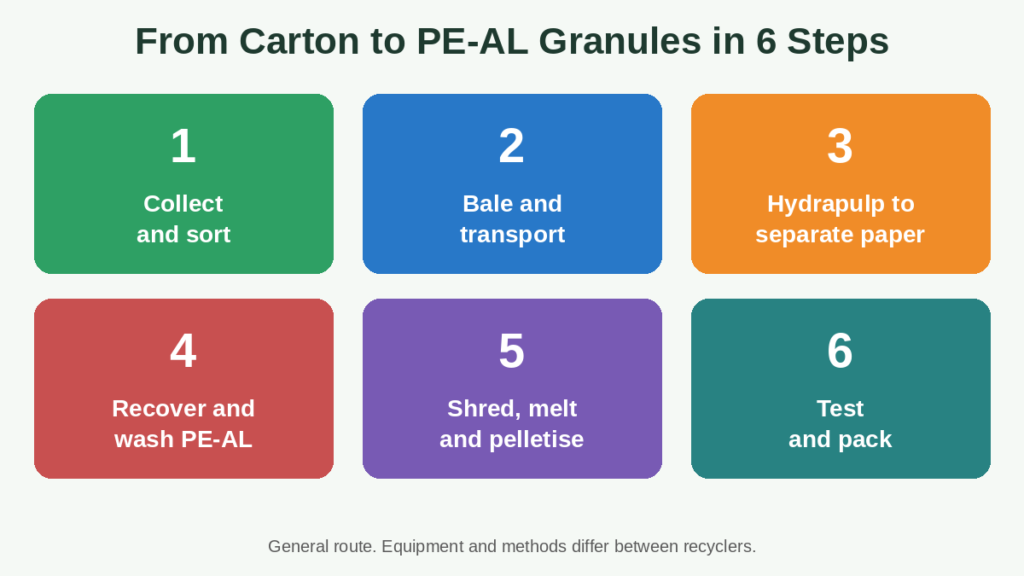
Recyclers differ in equipment and methods. This is the general route.
Step 1: Collect and Sort
Used cartons are collected from households, offices and waste dealers and sorted away from other waste. Rinsed, dry cartons give cleaner results.
Step 2: Bale and Transport
Cartons are pressed into bales and sent to a paper mill or recycler that can process them.
Step 3: Hydrapulping to Separate the Paper
The cartons are mixed with water and agitated in a machine called a hydrapulper. The paper fibres separate and are sent on to make paper products. The polyethylene and aluminium remain as a separate stream.
Step 4: Recover and Wash the PE-AL
The remaining polyAl is screened, washed and dried to remove leftover fibre and dirt.
Step 5: Shred, Melt and Pelletise
The dried material is shredded and then melted and cut into pellets or granules, usually with extrusion equipment. For the machines involved, see the plastic shredder machine and the beam profile extruder.
Step 6: Test and Pack
Granules are checked for consistency, then packed for manufacturers. Bulk packing can usually be arranged on request.
What Are PE-AL Granules Used For?
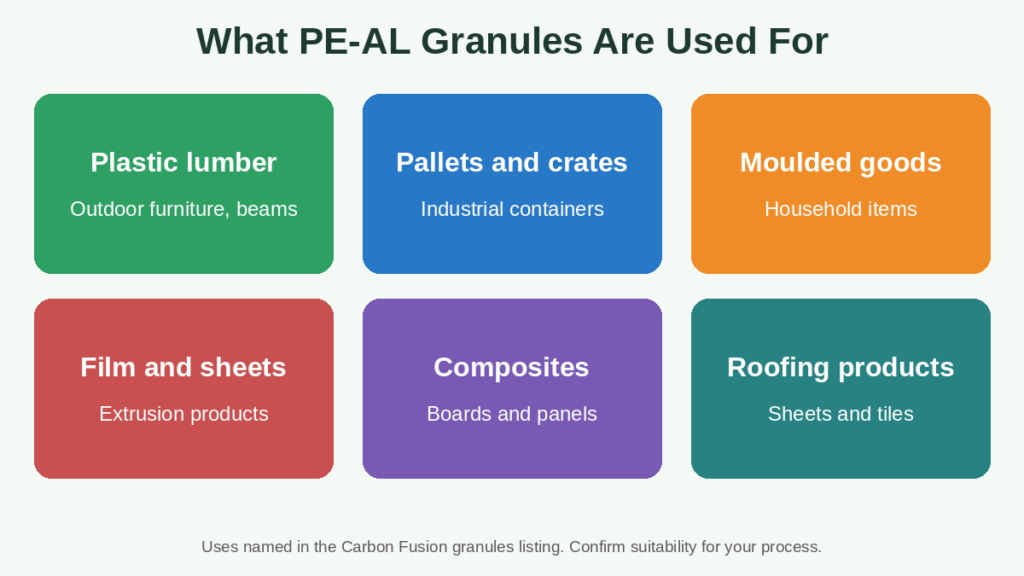
Carbon Fusion’s recycled plastic granules listing names these end uses:
- Plastic lumber and outdoor furniture: beams and slats for benches, like those described in our guide to how recycled plastic benches are made
- Pallets, crates and industrial containers: see the recycled plastic heavy-duty pallet
- Injection-moulded household goods
- Film extrusion and flat sheets
- Composite materials and roofing products
| Detail | As listed by Carbon Fusion |
|---|---|
| Source | Post-consumer Tetra Pak waste (PE and AL layers) |
| Form | Pellets or granules |
| Colour | Gray |
| Process compatibility | Extrusion, injection moulding, blow moulding |
| Supply | Bulk supply; packaging can be customised |
| Origin | Made in India |
Confirm current specifications and request a technical datasheet before ordering.
Where Tetra Pak Recycling Stands in India
A study by TERI for Tetra Pak India estimates the national recycling rate for used beverage cartons at about 48%, up from 29% in 2011. Across the 24 cities surveyed, the rate reached about 63.7%. You can read more on the TERI used beverage cartons study. Most of this recycling recovers the paper fibre, so building end markets for the polyethylene and aluminium part, such as granules, is the next step.
Planning a recycling or manufacturing project? Talk to the Carbon Fusion team about granules and machines.
What to Ask Before Buying Recycled Plastic Granules
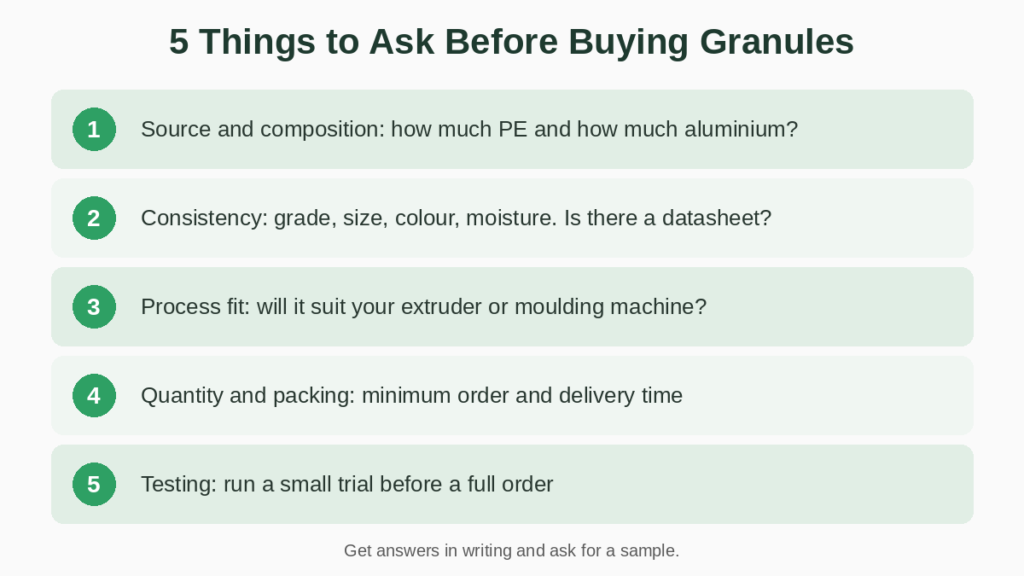
- Source and composition: what share is PE and what share is aluminium?
- Consistency: grade, size, colour and moisture. Can they share a datasheet?
- Process fit: will the granules suit your extruder or moulding machine? Ask for a sample.
- Quantity and packing: minimum order, packing size and delivery time.
- Testing: run a small trial before a full order.
Common Mistakes
- Buying without a sample. Granules behave differently in each machine.
- Skipping the datasheet. Specifications decide whether the material suits your product.
- Assuming all recycled granules are the same. Source and processing change the result.
- Ignoring moisture. Wet granules cause defects when melted.
Frequently Asked Questions
Can Tetra Pak cartons be recycled in India?
Yes. Paper mills recycle the paper fibre, and the polyethylene and aluminium can be turned into products such as granules, boards or sheets. Recycling depends on collection and recycling infrastructure in each area.
What is PE-AL?
PE-AL, also called polyAl, is the polyethylene and aluminium left after the paper fibre is separated from a carton.
What can PE-AL granules be used for?
Carbon Fusion’s listing names plastic lumber, outdoor furniture, injection-moulded goods, pallets, crates, film and sheets, composites and roofing products.
Are recycled plastic granules the same as virgin plastic?
No. Recycled granules can differ in colour, consistency and properties, so request a datasheet and trial sample.
Where can I buy recycled plastic granules in India?
Carbon Fusion, based in Noida, lists recycled plastic granules for bulk supply. Contact the team for technical details.
Conclusion: From Cartons to a Useful Raw Material
Hydrapulping separates paper from the polyethylene and aluminium in a carton, and what remains can become PE-AL granules for manufacturing. If you are considering recycled granules, ask for specifications and a trial sample.
Ready to explore? Browse the products, read about Carbon Fusion, or request a quote.
