
By Carbon Fusion
That crinkly chips packet in your hand is made of several layers fused together. It is light, it keeps food fresh, and it is one of the hardest kinds of plastic to recycle. A growing number of recyclers are finding a second life for it, and one of the results is a park bench.
Quick answer: Multi-layered plastic (MLP) is packaging made of more than one layer, such as plastic layers bonded to foil or paper. Because the layers cannot be easily separated, conventional recycling struggles with it. Recyclers can instead shred, melt and press or extrude MLP waste into solid beams and sheets, which are then assembled into durable furniture such as benches and tables. Carbon Fusion lists a 3-seater bench built from MLP beams.
What you’ll learn in this article:
- What MLP is and where it comes from
- Why multilayer plastic recycling is difficult
- The step-by-step route from MLP waste to furniture
- What to ask before buying MLP-based furniture
- Common questions, answered
Contents: What is MLP | Why it is hard to recycle | How it becomes furniture | Benefits | Where it is used | What to ask a supplier | FAQs | Conclusion
Want furniture made from hard-to-recycle plastic? Request a quote or browse the benches and seating collection.
What Is Multi-Layered Plastic (MLP)?
Multi-layered plastic is packaging built from two or more layers, each doing a job: one blocks air, another blocks moisture, another gives strength or a printable surface. India’s Plastic Waste Management Rules define this category as multilayered plastic packaging with at least one layer of plastic and at least one layer of material other than plastic. You can read the definition in the Plastic Waste Management (Amendment) Rules, 2022. The rules have since been amended again, so check the latest text.
Everyday examples include:
- Chips, biscuit and snack wrappers
- Sachets and pouches for shampoo, detergent or spices
- Laminated packaging and some tubes
- Beverage cartons, which combine paperboard, plastic and sometimes aluminium (covered in our guide to Tetra Pak recycling)
Why Multilayer Plastic Recycling Is Difficult
- Bonded layers: adhesives hold the layers together, so they cannot simply be pulled apart.
- Mixed materials: plastics and non-plastic layers behave differently when heated.
- Low weight and low value: a sachet weighs almost nothing, so collecting enough takes effort.
- Contamination: food residue on packets complicates processing.
- Limited recycling routes: when conventional recycling is not practical, MLP often ends up in landfill, co-processing or energy recovery.
For the wider picture, see this overview of plastic recycling.
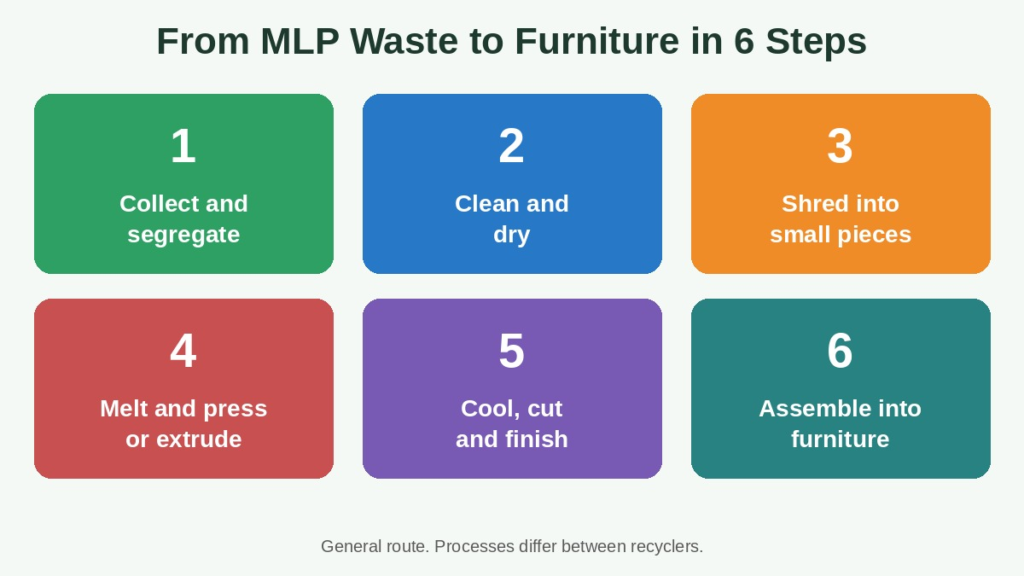
How MLP Waste Becomes Furniture: Step by Step
Processes differ between recyclers. The route below describes the general idea.
Step 1: Collect and Segregate
MLP waste is collected from households, businesses and waste streams and sorted away from other materials. Segregation at source makes every later step easier.
Step 2: Clean and Dry
Dirt, labels and moisture are removed. Dry, clean material melts more evenly and gives a stronger finished product.
Step 3: Shred
The packaging is cut into small pieces by a shredder. Recyclers use machines such as the plastic shredder machine.
Step 4: Melt and Shape
The shredded material is heated and shaped. It can be pressed into sheets or pushed through an extruder into long beams, using equipment like a beam profile extruder.
Step 5: Cool, Cut and Finish
The beams or sheets cool and set, then are cut to size and finished so edges are smooth.
Step 6: Assemble Into Furniture
Beams are fixed to frames or joined into benches, tables and other seating. Carbon Fusion’s MLP bench listing describes a 3 x 5 ft, 3-person bench built from 10 plastic beams, using about 32 kg of plastic. See the current 3-seater recycled plastic bench page for the latest details.
Curious how benches are made in general? Read how plastic waste becomes park seating.
Benefits of Turning MLP Into Furniture
- Gives hard-to-recycle waste a use: material that is difficult to handle becomes long-lasting seating.
- Durable outdoors: recycled plastic does not rot or attract termites and handles rain well.
- Low maintenance: it usually needs only an occasional wash.
- A visible sustainability story: institutions can show what their waste became.
Where MLP-Based Furniture Is Used
- Parks and gardens: benches and the picnic table set
- Schools and campuses: the school desk bench
- Resorts and housing societies: outdoor seating such as the outdoor dining set with a round table and four benches
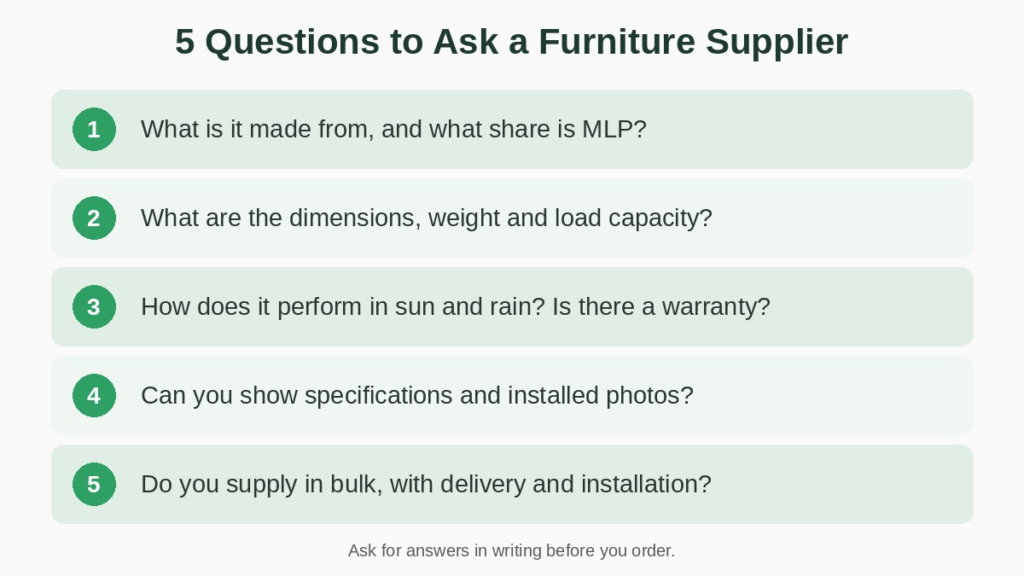
What to Ask a Supplier Before You Buy
- What raw material is the furniture made from, and what share is MLP?
- What are the dimensions, weight and load capacity?
- How does the material perform in sun and rain, and is there a warranty?
- Can they show specifications and photos of installed pieces?
- Do they supply in bulk and support delivery and installation?
Frequently Asked Questions
What does MLP stand for?
MLP stands for multi-layered plastic: packaging made from more than one layer of material.
Why can’t MLP go into normal plastic recycling?
The layers are bonded and often include different materials, so standard recycling lines cannot separate them easily.
Can chips packets really become furniture?
Recyclers can shred and melt such packaging into beams or sheets that are assembled into products like benches, depending on their process and equipment.
Is furniture made from MLP strong enough for outdoor use?
Strength depends on the process and design. Ask for specifications, load capacity and warranty terms.
Where can I buy furniture made from MLP in India?
Carbon Fusion, based in Noida, lists a 3-seater bench made from MLP beams. Contact the team to confirm current options.
Conclusion: From Throwaway Packaging to Lasting Seating
Multi-layered plastic is hard to recycle by conventional means, but shredding, melting and shaping can turn it into solid beams for furniture. If you are choosing recycled plastic seating, ask what it is made from and check the specifications.
Ready to explore? Browse the products, read about Carbon Fusion, or request a quote.
