
By Carbon Fusion
Most plastic waste disappears into landfills, drains and dumpsites. A recycled plastic sculpture does the opposite: it puts that waste where thousands of people see it every day.
Quick answer: A recycled plastic sculpture is public art made from post-consumer plastic such as HDPE and PP. The plastic is sorted, shredded, pressed into sheets or extruded into profiles, then cut and assembled into a form. Because it does not rust or rot, a well-built piece suits parks, airports and campuses, where art has to survive weather and heavy footfall with little upkeep.
What you’ll learn in this article:
- What a recycled plastic sculpture is and how it is built
- Why these sculptures matter for cities, brands and institutions
- Where they work best, from parks to airport terminals
- How a custom piece is made, step by step
- How to choose a material, care for a sculpture and avoid common mistakes
Contents: What it is | Why it matters | Where it works | How it is made | How to choose | Care | Common mistakes | FAQs
Planning a landmark for a park, terminal or campus? Talk to the Carbon Fusion team about a custom piece, or browse our recycled art and sculptures.
What Is a Recycled Plastic Sculpture?
A recycled plastic sculpture is a three-dimensional artwork whose main material is reused plastic rather than new resin, metal or stone. The plastic is usually turned into a workable stock first, such as sheets, beams or moulded parts, and then shaped into the final form.
Common ways to build one:
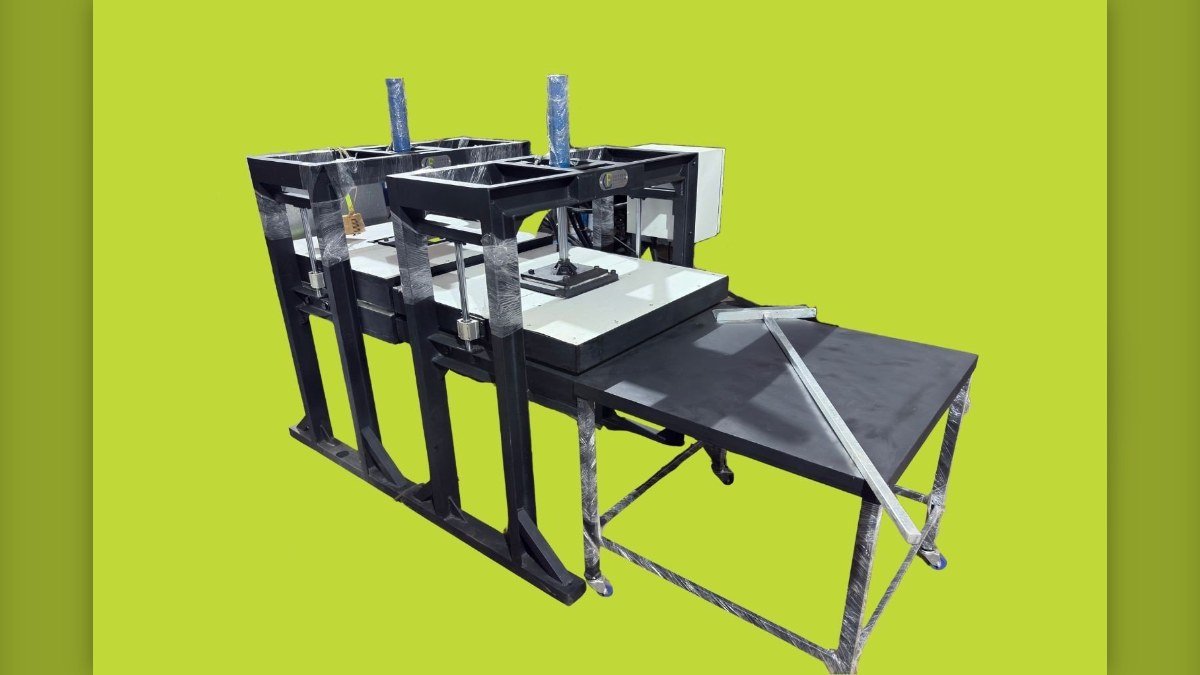
- Sheet-built: shredded plastic is pressed into flat sheets, then cut and layered into shapes. A 1×1 metre plastic sheet press can make recycled sheets from HDPE, PP and LDPE.
- Profile-built: plastic is extruded into planks, beams and tubes that work like timber. An extrusion machine for recycled plastic produces these profiles.
- Moulded parts: smaller elements such as eyes, scales or logos are moulded or carved from solid blocks.
- Found-object art: bottles, caps and other items are assembled as they are, often to make a point about waste.
Most outdoor pieces combine several of these methods over an internal frame, so the sculpture stays rigid and safe.
Why Recycled Plastic Sculptures Matter
India generates a lot of plastic waste. According to CPCB figures shared by the Ministry of Environment (PIB), plastic waste generation in 2020-21 was 4,126,997 tonnes per annum. Turning even a small share of it into lasting public objects keeps that material in use and in view.
Plastic art also works as a message. The Washed Ashore project in the United States builds large sea-life sculptures made entirely of debris from beaches, and its volunteers have gathered more than 60,000 pounds of it.
For buyers, the practical benefits matter just as much:
- Weather-proof. Plastic does not rust or rot, so it suits open, rainy and humid sites.
- Lighter than stone or metal. Easier to transport, lift and install, and gentler on rooftops and podiums.
- Colour through the material. Coloured plastic can show the same colour on every face, so small chips are less visible.
- A clear sustainability story. Visitors can see the waste-to-value idea, which supports CSR and green-campus goals.
Where Recycled Plastic Sculptures Work Best
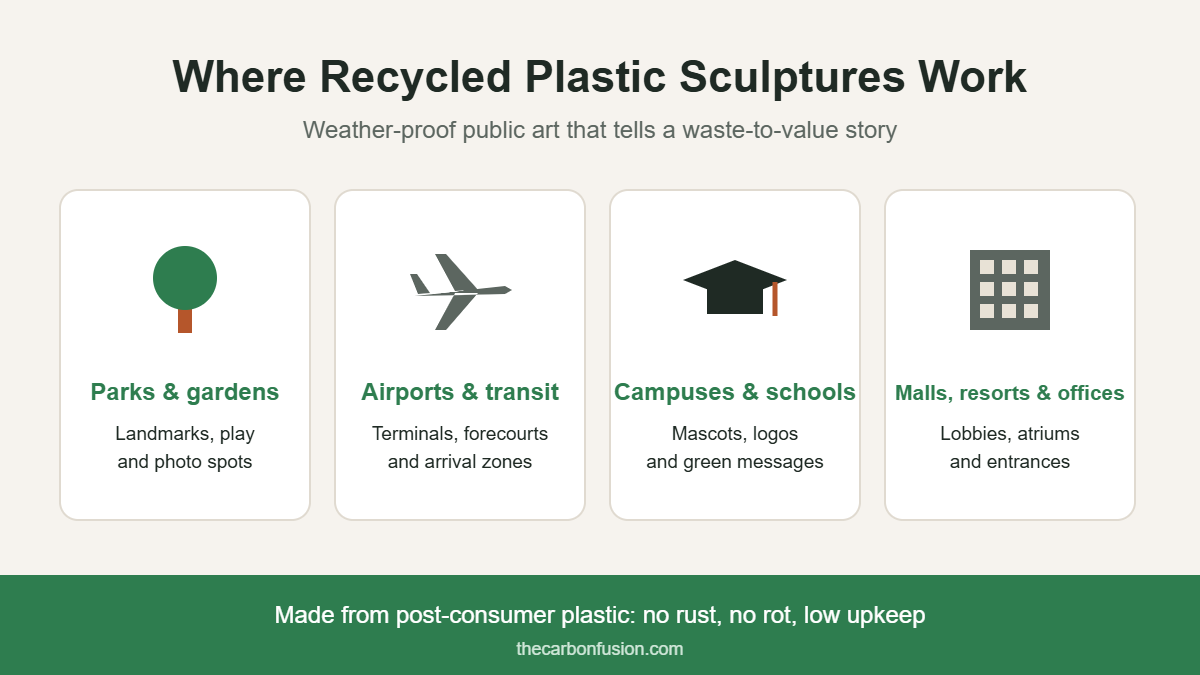
Parks and Public Gardens
Animal figures, abstract forms and photo-spot installations draw families and give a park an identity. They pair well with other recycled plastic public amenities such as bins and lamps.
Airports and Transit Hubs
Forecourts, arrival halls and landscaped drop-off zones need art that survives crowds and cleaning. For indoor terminals, check the venue’s fire-safety and material rules before you finalise a design.
Campuses and Schools
Universities and schools use mascots, logo pieces and installations built with student-collected plastic. They make sustainability lessons visible every day.
Malls, Resorts and Corporate Offices
Atriums, lobbies and entrances benefit from a signature piece that tells visitors the brand takes waste seriously.
Have a site in mind? Share your brief with Carbon Fusion, including the location, size and theme, and ask whether your design can be made in recycled plastic.
How a Recycled Plastic Sculpture Is Made: Step by Step
Every workshop works a little differently. This is the general process for a custom piece.
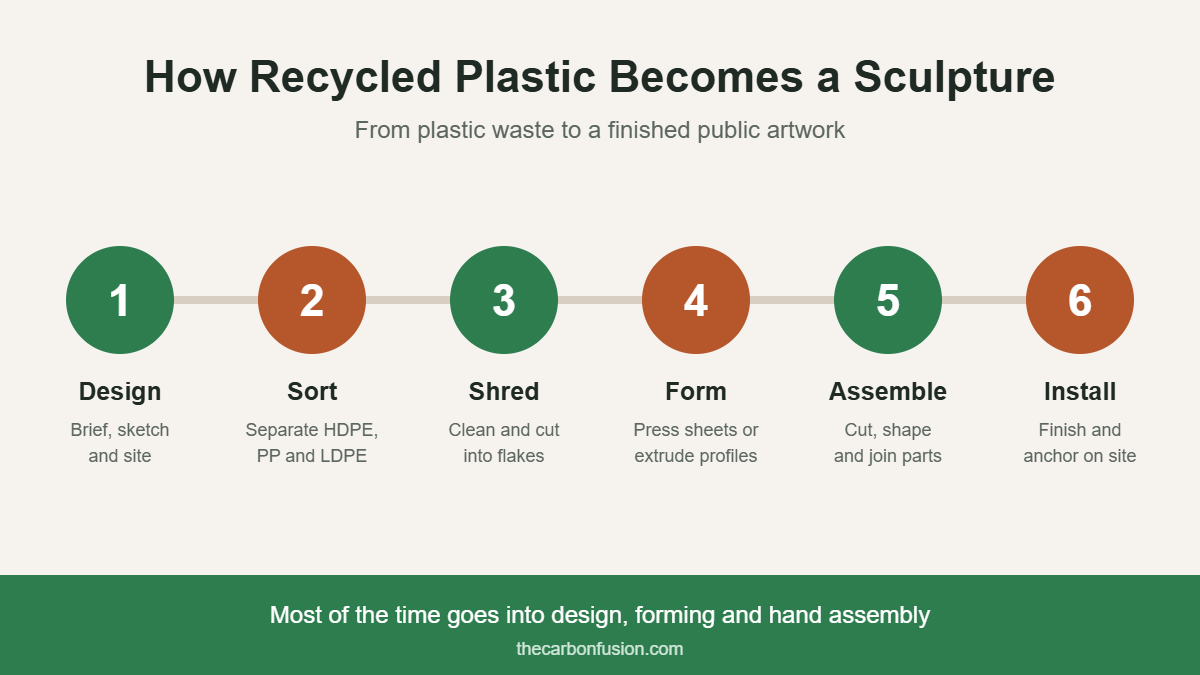
Step 1: Brief and Design
Agree on the theme, size, viewing angles and site. The buyer approves a drawing or 3D render before fabrication starts.
Step 2: Collect and Sort the Plastic
Post-consumer plastic is separated by type, mainly HDPE, PP and LDPE, and by colour. Sorting matters because different plastics melt and bond differently.
Step 3: Clean and Shred
Labels, dirt and residue are removed, and the plastic is shredded into flakes. Clean flakes give stronger, smoother sheets and profiles.
Step 4: Form Sheets, Profiles or Parts
Flakes are pressed into sheets, extruded into beams and planks, or moulded into parts. Recycled material can also come in as granules: Carbon Fusion lists recycled plastic granules made from post-consumer Tetra Pak waste for products such as plastic lumber.
Step 5: Cut, Shape and Assemble
Sheets and profiles are cut, shaped and fixed over an internal frame with fasteners or plastic welding. Larger pieces need a steel or composite core for strength.
Step 6: Finish and Install
Edges are smoothed and joints checked. Outdoor pieces are fixed to a concrete footing or base plate so they stay stable in wind and cannot be tipped over.
How to Choose a Sculpture Material
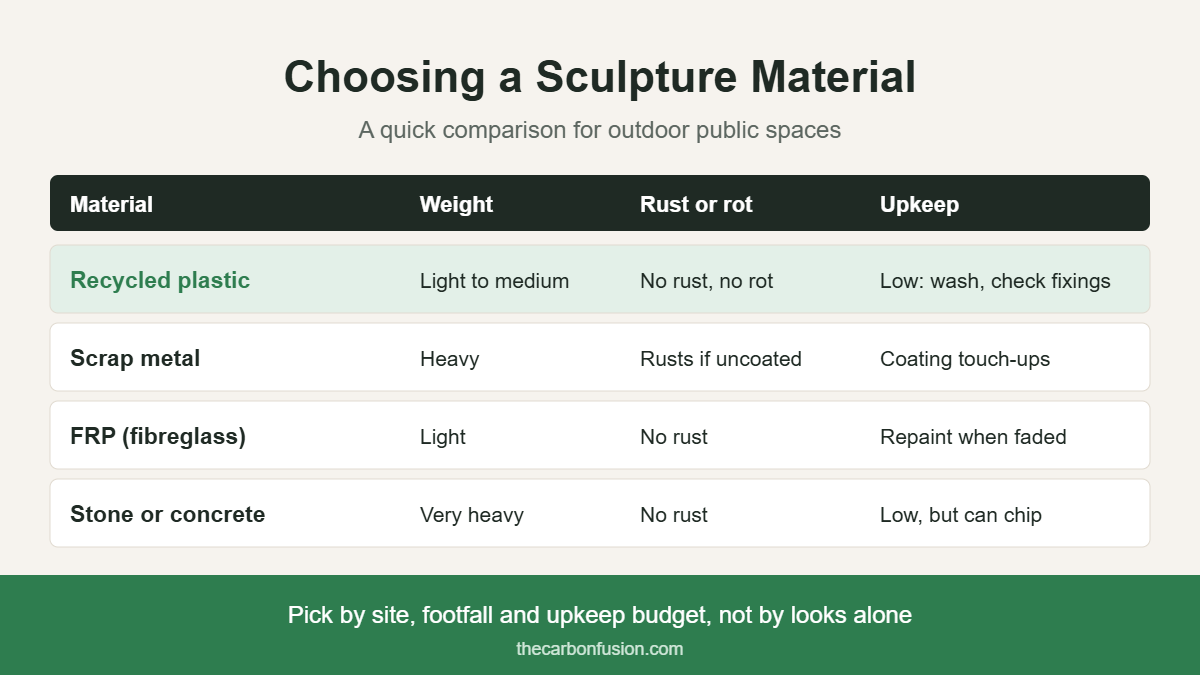
Recycled plastic is not the only option. Compare it with the other common materials before you decide.
| Question to ask | Why it matters |
|---|---|
| Indoor or outdoor? | Outdoor pieces need UV-stable material and a secure base. Indoor venues may have fire-safety rules. |
| How big, and seen from where? | Match size to viewing distance. A plaza or forecourt needs a larger piece than a garden corner. |
| Who will touch it? | In schools and play areas, ask for rounded edges and no gaps where small hands can get caught. |
| What story should it tell? | Visible bottles or caps make the recycling message obvious; smooth sheets give a cleaner, sculpted look. |
| What upkeep budget is there? | Plastic needs little upkeep; metal may need coating touch-ups. |
Prefer the look of metal? Our guide to scrap metal sculptures explains how industrial waste becomes garden and wall art.
How to Care for a Recycled Plastic Sculpture
- Wash it a few times a year with water and mild soap to remove dust and bird droppings.
- Check fixings and the base once a year, and after storms for large pieces.
- Look for cracks or loose parts near joints, especially in high-footfall areas.
- Avoid solvents and pressure washers at close range, which can mark the surface.
- Remove graffiti early with a mild cleaner before it sets.
Common Mistakes to Avoid
- Skipping the base. Light materials still need a proper anchor against wind and climbing.
- Ignoring sun exposure. Ask whether the plastic is UV-stabilised for Indian summers.
- Forgetting fire rules indoors. Airports and malls may have strict material requirements.
- Choosing size from a photo. Mark the height on site before ordering.
- Leaving it too late. Custom work takes time, so plan ahead of an opening or event.
Frequently Asked Questions
What is a recycled plastic sculpture made of?
Mostly post-consumer plastics such as HDPE, PP and LDPE, turned into sheets, profiles or moulded parts and assembled over an internal frame.
Are recycled plastic sculptures durable outdoors?
Yes, if they are designed for outdoor use. Plastic does not rust or rot, but the piece needs UV-stable material, sound joints and a secure base.
Will a recycled plastic sculpture fade in the sun?
Some fading is possible over time in strong sun. Ask about UV stabilisation and choose colours that age well.
Can recycled plastic sculptures be used inside airports or malls?
Often, yes, but indoor venues may have fire-safety and material rules. Share the venue’s requirements with the maker at the design stage.
Does Carbon Fusion make custom recycled sculptures?
Carbon Fusion, based in Noida, manufactures recycled plastic products and offers custom sculptures and installations from reclaimed materials. Contact the team with your brief to discuss what can be made in recycled plastic.
Conclusion: Public Art That Puts Waste to Work
A recycled plastic sculpture gives a park, terminal or campus a landmark that survives weather and footfall while showing visitors what waste can become. Plan the design, size and base carefully, check the venue’s rules, and the piece can stay on display for years.
Ready to plan yours? See Carbon Fusion’s recycled art and sculptures, read about Carbon Fusion, or share your brief for a custom piece.
