
By Carbon Fusion
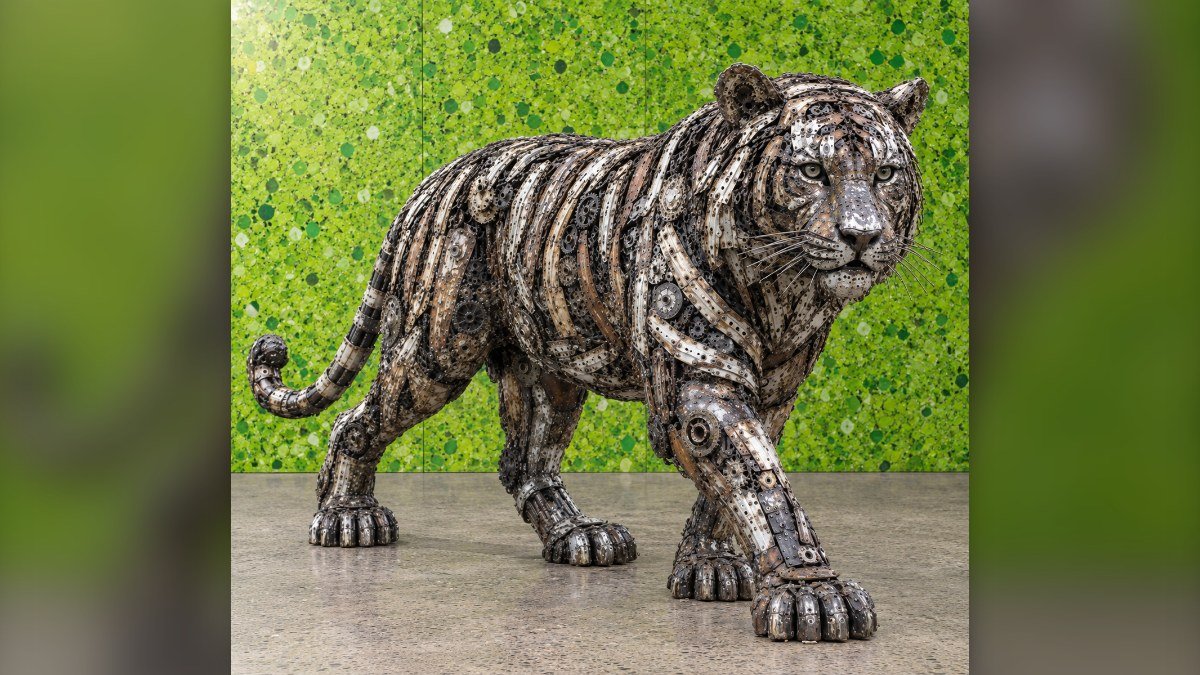
Old gears, bolts and bicycle chains usually end up in a scrap yard. In the right hands, they become a tiger guarding a garden or an India map greeting visitors in a lobby.
Quick answer: A scrap metal sculpture is artwork built by cutting, shaping and welding discarded metal parts such as nuts, bolts, gears, chains and sheet offcuts. The scrap is cleaned, arranged over a steel frame, welded piece by piece and sealed with a protective finish. Done well, the result is a one-of-a-kind piece that can stand outdoors for years and puts industrial waste to visible use.
What you’ll learn in this article:
- What scrap metal sculpture is and which scrap is used
- Why it matters for waste, budgets and brand stories
- The main types, from animal statues to wall art
- How a sculpture is made, step by step
- How to choose, install and care for one
Contents: What it is | Why it matters | Types | How it is made | How to choose | Care | Common mistakes | FAQs
Planning a statue for a park, campus or resort? Request a quote or browse Carbon Fusion’s recycled art and sculptures.
What Is a Scrap Metal Sculpture?
A scrap metal sculpture is a three-dimensional artwork made mostly from reused metal instead of new stock. Rather than casting bronze or carving stone, the maker builds the form from parts that already exist and lets their shapes show.
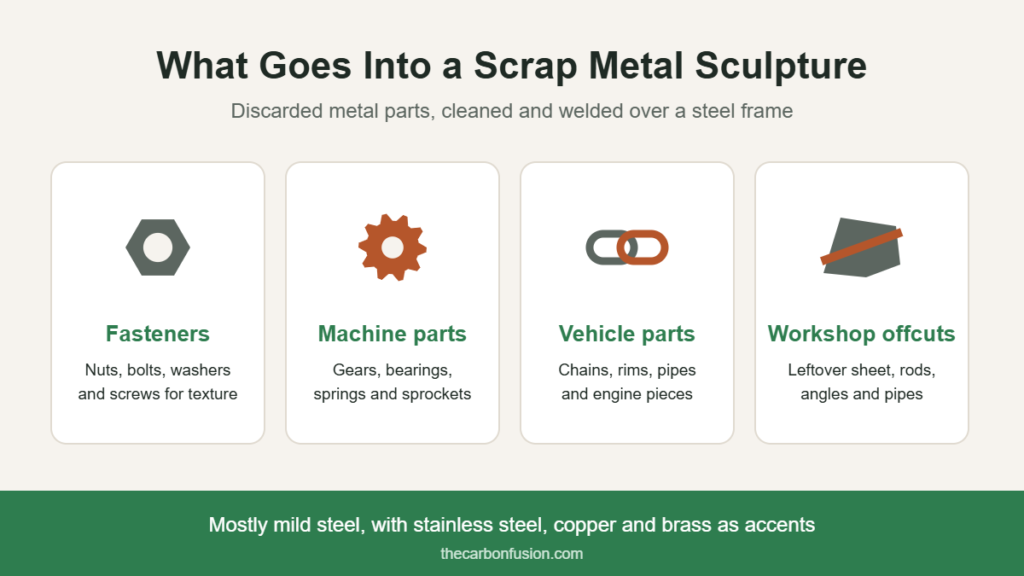
Common materials include:
- Fasteners: nuts, bolts, washers and screws, often used for texture such as fur or scales
- Machine parts: gears, bearings, springs and sprockets
- Vehicle parts: chains, rims, pipes and engine components
- Workshop offcuts: leftover sheet, rods, angles and pipes
Most pieces are mild steel, which welds easily and is easy to source. Stainless steel, copper and brass appear as accents.
Why Scrap Metal Sculptures Matter
Steel is one of the most recycled materials in the world. According to the World Steel Association, every tonne of steel scrap used avoids about 1.5 tonnes of CO2 and saves 1.4 tonnes of iron ore and 740 kg of coal. A sculpture goes a step further: it keeps the metal in use without remelting it at all.
India already has large public examples. Delhi’s Waste to Wonder Park used about 150 tonnes of industrial and other waste, including scrap iron, old automobile parts and pipes, to build replicas of the Seven Wonders of the World.
For buyers, the appeal goes beyond the environment:
- Every piece is unique. Handmade welding means no two sculptures are identical.
- It tells a story. Visitors see the bolts and gears and instantly understand the waste-to-art idea.
- It supports CSR and sustainability goals. Companies, schools and municipalities can show circular-economy action in a visible way.
- It creates landmarks. Large statues become photo spots that draw people to parks, malls and resorts.
Types of Scrap Metal Sculptures
Animal Statues
Tigers, elephants, horses and birds are the most popular forms, because nuts and washers make convincing fur and feathers. Carbon Fusion’s recycled metal tiger statue stands 3 to 4 ft tall and is made from welded nuts, bolts, washers, gears and sheet offcuts for gardens, resorts and corporate campuses.
Wall Art and Murals
Flat or low-relief pieces hang in lobbies, offices and reception areas. Maps, logos and mandalas are common themes. One example is this scrap metal India map wall sculpture, with an Ashoka Chakra at the centre built from gears, bearings, springs and machine parts.
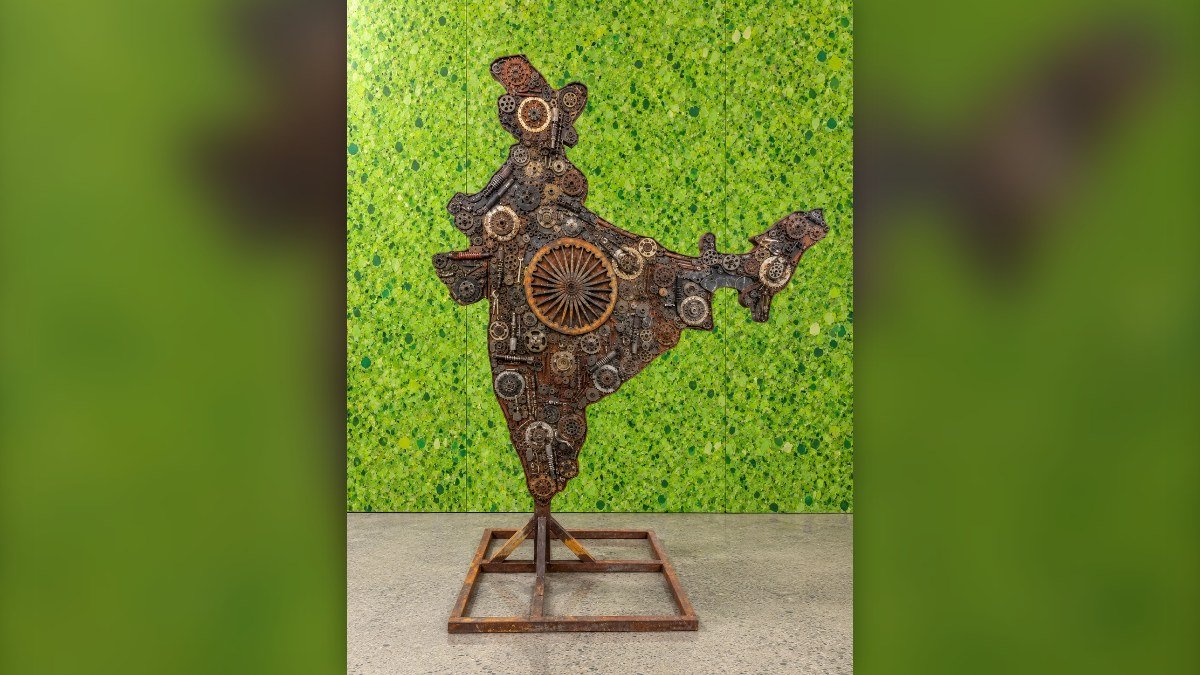
India map wall art made from gears and machine parts.
Mascots and Brand Figures
Schools, sports clubs and companies commission mascots or logo sculptures for entrances. These are made to order, so size, pose and finish can follow the brand.
Large Installations
Parks and theme spaces use oversized pieces as landmarks. For parks and lawns, a large outdoor tiger sculpture in the 6 to 8 ft range makes a strong focal point.
Abstract and Functional Pieces
Some sculptures are pure form, while others double as planters, lamps or seating. They suit spaces where art also needs to do a job.
Need a custom piece? Talk to the Carbon Fusion team about size, theme and finish for your garden, campus or office.
How Scrap Metal Becomes a Sculpture: Step by Step
Every workshop works a little differently. This is the general process.
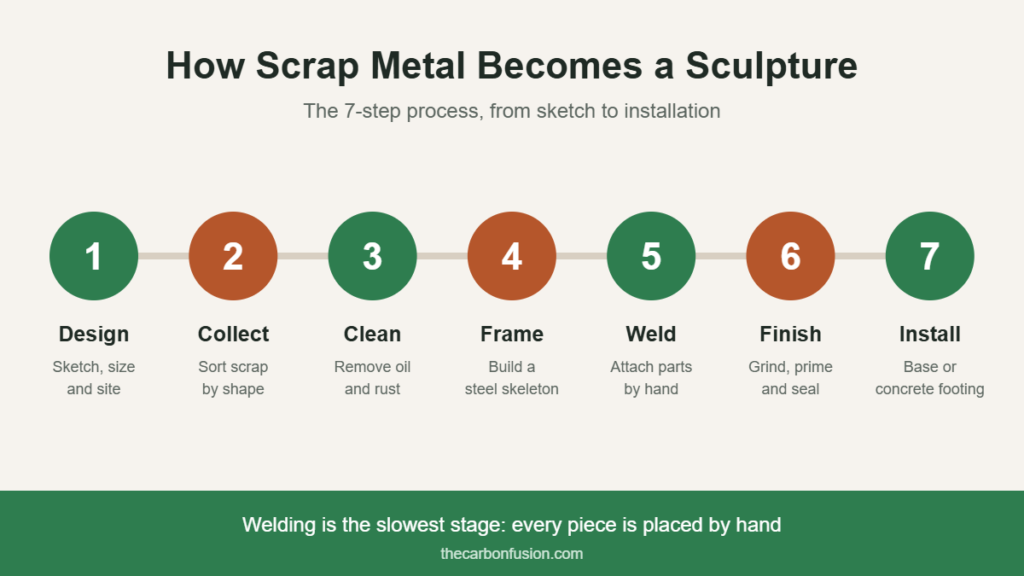
From sketch to installation: how a scrap metal sculpture is made.
Step 1: Design and Sketch
The piece starts with a drawing or reference images, plus the final size and where it will stand. For custom work, the buyer approves this drawing before fabrication starts.
Step 2: Collect and Sort the Scrap
Parts are gathered from scrap yards, workshops and garages, then sorted by shape and size. Round gears might become eyes or joints, while washers become scales or fur.
Step 3: Clean and Remove Rust
Oil, old paint and loose rust come off with wire brushes, grinders or sandblasting. Clean metal welds better and holds paint longer.
Step 4: Build the Frame
A skeleton of steel rods or pipes sets the shape and carries the load. Bigger statues need a stronger internal frame and a base plate.
Step 5: Weld the Pieces On
Parts are tack-welded in place, checked, then fully welded. This is the slowest stage, because each piece is placed by hand.
Step 6: Grind and Finish
Sharp edges are ground smooth. The sculpture is then primed and sealed with paint, clear coat or a deliberate rust patina, depending on the look and the setting.
Step 7: Install
Small pieces are free-standing. Large outdoor statues are usually bolted to a concrete footing so they stay stable in wind and cannot be tipped over.
How to Choose a Scrap Metal Sculpture
| Question to ask | Why it matters |
| Where will it stand? | Outdoor pieces need a weatherproof coating. Coastal sites need extra protection from salt air. |
| How big should it be? | Match size to viewing distance. A 3 to 4 ft piece suits a garden; a park entrance may need 6 ft or more. |
| Who will be around it? | In schools and play areas, ask for ground-smooth edges and no gaps where small hands can get caught. |
| Ready-made or custom? | Custom work needs drawing approval and more time, so ask about lead time early. |
| How will it be installed? | Confirm weight, base and anchoring before delivery. |
Planning a whole outdoor space? Pair sculptures with seating and amenities. Read our guide to the benefits of recycled plastic garden furniture and see Carbon Fusion’s public amenities range.
How to Care for a Scrap Metal Sculpture
- Clean it a few times a year with water and a soft brush to remove dust, leaves and bird droppings.
- Check the coating every year. Touch up chips and scratches before rust spreads.
- Inspect welds and anchors, especially on large statues and after storms.
- Stop water pooling in hollow sections; small drain holes help.
- Avoid harsh chemicals that can strip the protective finish.
Common Mistakes to Avoid
- Using an indoor finish outdoors. Ask how the piece is sealed.
- Skipping the anchor. Tall statues need a proper base.
- Ignoring sharp edges where children play.
- Choosing size from a photo. Mark the height on site before you order.
- Ordering custom work too late. Handmade pieces take time, so leave a buffer before an event or opening.
Frequently Asked Questions
What is a scrap metal sculpture made of?
Mostly discarded steel parts such as nuts, bolts, washers, gears, chains, springs and sheet offcuts, welded over a steel frame.
Can scrap metal sculptures be kept outdoors?
Yes, if they are cleaned, primed and sealed with a weatherproof finish. Check the coating once a year and touch up any chips.
Will a scrap metal sculpture rust?
Bare steel rusts when it meets moisture. A good coating slows this down a lot. Some buyers choose a controlled rust patina on purpose for a rustic look.
Can I order a custom scrap metal sculpture?
Yes. Carbon Fusion makes custom sculptures and mascots, and its India map wall sculpture can be customised in size, mounting style and finish.
Where can I buy scrap metal sculptures in India?
Carbon Fusion, based in Noida, makes recycled metal sculptures to order and delivers across India. Browse the recycled art and sculptures collection or request a quote.
Conclusion: Turning Scrap Into Statements
Scrap metal sculpture takes parts that would otherwise sit in a scrap yard and turns them into durable, one-of-a-kind art. With the right size, a weatherproof finish and a solid base, a sculpture can anchor a garden, a lobby or a public park for years.
Ready to explore? Browse Carbon Fusion’s sculptures, read about Carbon Fusion, or request a quote for a custom piece.
