
By Carbon Fusion
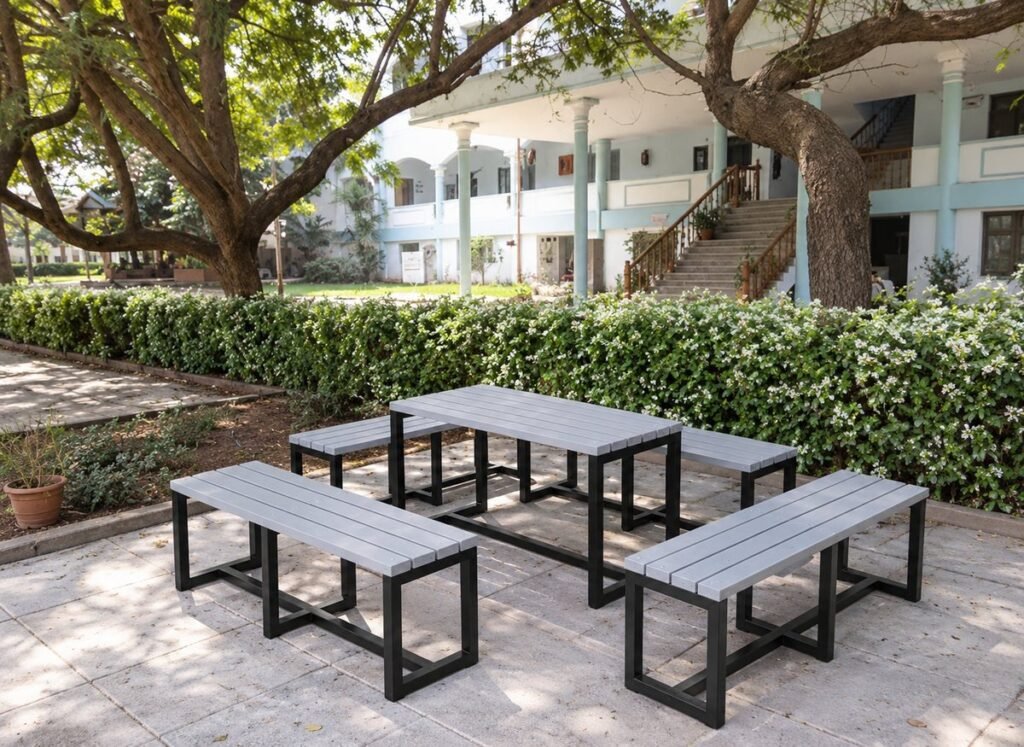
Carbon Fusion’s minimal recycled plastic bench in a park setting.
A bench that looks perfect at handover can look tired after one monsoon. The material you pick decides whether it stays that way or turns into a yearly repair job.
Quick answer: If you want maintenance free outdoor benches for Indian conditions, recycled plastic is usually the lowest-upkeep choice. It does not rot, rust or feed termites. Wood needs regular sealing and metal needs anti-rust care, so both can cost more over time than their price tag suggests. Recycled plastic often costs more upfront, so the right comparison is total cost over several years, not purchase price alone.
What you’ll learn in this article:
- How wooden, metal and recycled plastic benches behave outdoors
- Why monsoon, heat and termites matter so much in India
- A side-by-side comparison table
- A four-step way to compare total cost
- Which material suits schools, parks, resorts and coastal sites
Need benches for a park, school or campus? See the Carbon Fusion benches and seating collection for current designs.
What Are Wooden, Metal and Recycled Plastic Benches?
Wooden benches use timber slats on a wood or steel frame. They look natural and are easy to repair, but timber is a natural material and reacts to water, sun and insects.
Metal benches are usually painted or coated steel, cast iron or aluminium. They are strong and long-lived when the coating is intact, but exposed metal can corrode.
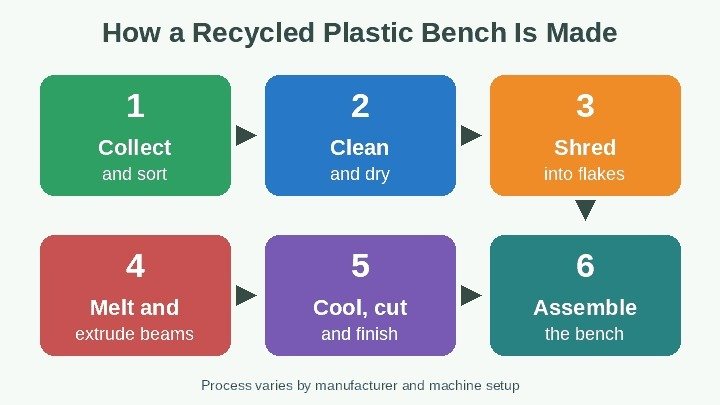
Recycled plastic benches are made from sorted, cleaned and reprocessed plastic waste, formed into solid beams (often called plastic lumber) and assembled into seating. Colour runs through the material rather than sitting on a painted surface.
Why the Material Matters in India
Outdoor furniture in India faces a harder test than in many other countries.
- Monsoon rain keeps surfaces wet for weeks, which causes wood to swell, split or rot.
- Strong sun and heat fade paint, dry out timber and make some surfaces uncomfortable to sit on.
- Termites are a routine problem for wooden furniture across much of the country.
- Coastal and humid regions speed up corrosion on steel.
- Public budgets rarely include a yearly repainting and sealing round, so deferred maintenance is common.
Planning a bulk or CSR order? Contact the Carbon Fusion team for quantities, colours and delivery.
How the Three Materials Compare
Wooden Benches
Wood is warm, familiar and often cheapest to buy. The catch is upkeep. It needs regular sealing or varnish, and it stays vulnerable to rot, warping and termites even when treated. Replacing individual slats is easy, but it becomes a recurring job.
Metal Benches
Metal handles load well and lasts when its coating holds. Once paint chips, rust starts, especially in humid or coastal areas, so repainting is part of ownership. Metal also gets very hot in direct sun, and in some places scrap value makes metal fixtures a theft target.
Recycled Plastic Benches
Plastic beams do not absorb water, rust or attract termites, so there is nothing to seal or repaint. A wash is usually enough. Trade-offs: the purchase price can be higher than basic wood or steel, and plastic can warm up in direct sun, so shade and colour choice matter. Carbon Fusion’s minimal recycled plastic bench is one example of a clean, low-upkeep design.
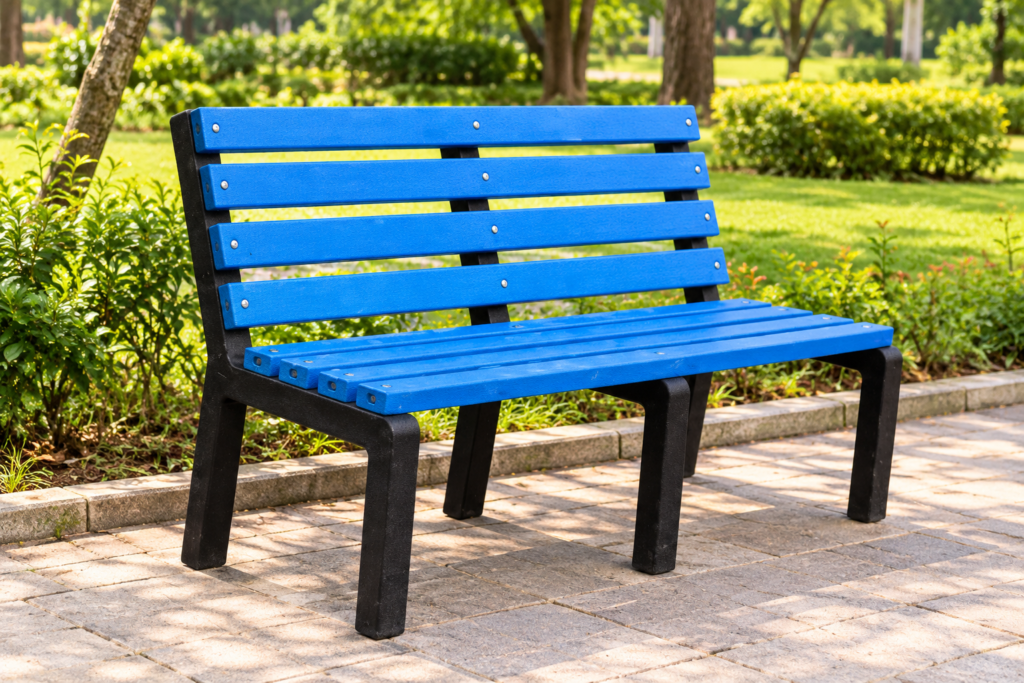
Carbon Fusion’s Eco Bench, made from 100% recycled plastic.
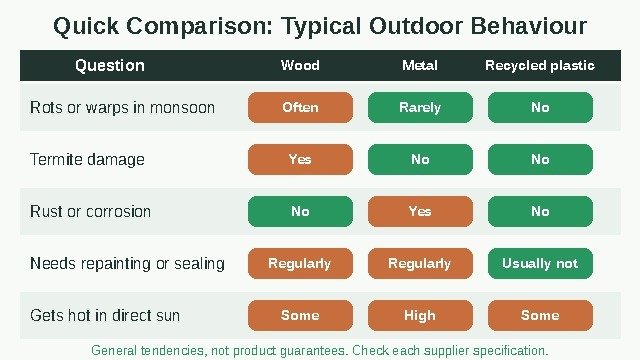
| Factor | Wood | Metal | Recycled plastic |
|---|---|---|---|
| Upfront price | Often lowest | Low to medium | Often higher |
| Rain and humidity | Can rot or warp | Can corrode if coating fails | Not affected |
| Termites | Vulnerable | Not affected | Not affected |
| Rust | Not applicable | Yes, if unprotected | No |
| Routine upkeep | Sealing, varnish, slat repair | Repainting, rust treatment | Occasional wash |
| Heat in direct sun | Moderate | Can be very hot | Can warm up; shade helps |
| End of life | Often discarded | Scrap value | Plastics can generally be reprocessed |
Figures vary by product, thickness and finish. Treat this as a guide and ask each supplier for specifications.
How to Compare Total Cost in 4 Steps
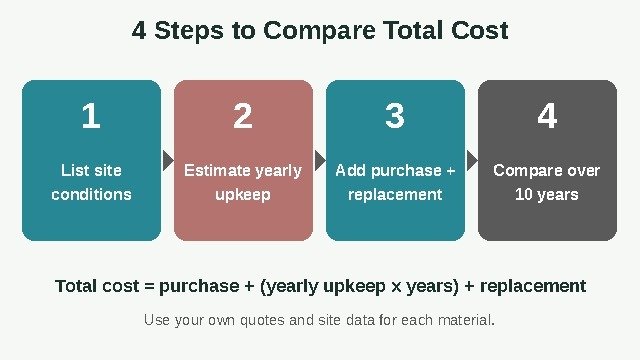
Step 1: List Your Site Conditions
Note rainfall, coastal exposure, termite risk, shade and how many people will use the benches. A school courtyard and a seafront promenade need different answers.
Step 2: Estimate Yearly Upkeep
For each material, add up the cost of sealing, repainting, slat or part replacement and the labour to do it. Ask your maintenance team what they actually spend today.
Step 3: Add Purchase and Replacement Cost
Get written quotes. Include delivery, installation and the likely replacement point for each material.
Step 4: Compare Over Ten Years
Use this formula for each material: total cost = purchase price + (yearly upkeep x number of years) + replacement cost. The lowest purchase price is often not the lowest total.
Which Material Suits Which Location?
- Schools and colleges: recycled plastic reduces repair calls. See the school desk bench.
- Public parks and gardens: plastic copes with rain and termites with little care. The eco bench is a park-style option.
- Coastal and humid sites: avoid unprotected steel; plastic avoids the rust problem.
- Resorts and heritage spaces: wood can suit the look, if the budget covers regular upkeep.
- Corporate campuses and events: custom-branded recycled plastic benches carry colours and logos.
Common Mistakes When Choosing Outdoor Benches
- Comparing only purchase price. Upkeep over several years often changes the ranking.
- Ignoring the site. Termites, salt air and shade change which material performs well.
- Skipping the specification sheet. Ask for material, beam thickness, weight and seating capacity.
- Forgetting installation. Public benches may need anchoring to resist theft or tipping.
- Assuming all plastic benches are equal. Composition and build quality vary, so ask what the bench is made from.
Frequently Asked Questions
Are recycled plastic benches really maintenance free?
They are very low maintenance rather than zero. There is nothing to seal, paint or treat for termites, but benches still benefit from an occasional wash and a check of fixings.
Are recycled plastic benches more expensive than wooden benches?
Often, at purchase. Over several years the gap can narrow, because wood needs recurring sealing and repair. Compare quotes using the four-step method above.
Do plastic benches get too hot in the Indian sun?
Any plastic surface can warm in direct sunlight. Lighter colours and shaded placement help.
Can recycled plastic benches be branded for a campus or company?
Yes. Colour is part of the material, and Carbon Fusion offers custom-branded benches.
What happens to a plastic bench at end of life?
Plastics of this kind can generally be reprocessed, which is one advantage over timber that has rotted.
Conclusion: Choose on Total Cost, Not Price Tag
Wood and metal can work when someone budgets for sealing, repainting and repairs. If your site has heavy rain, termites or humid air, and you want maintenance free outdoor benches, recycled plastic is usually the lower-effort choice over time.
Ready to compare? Browse the shop, read about Carbon Fusion, or request a quote.
