
By Carbon Fusion
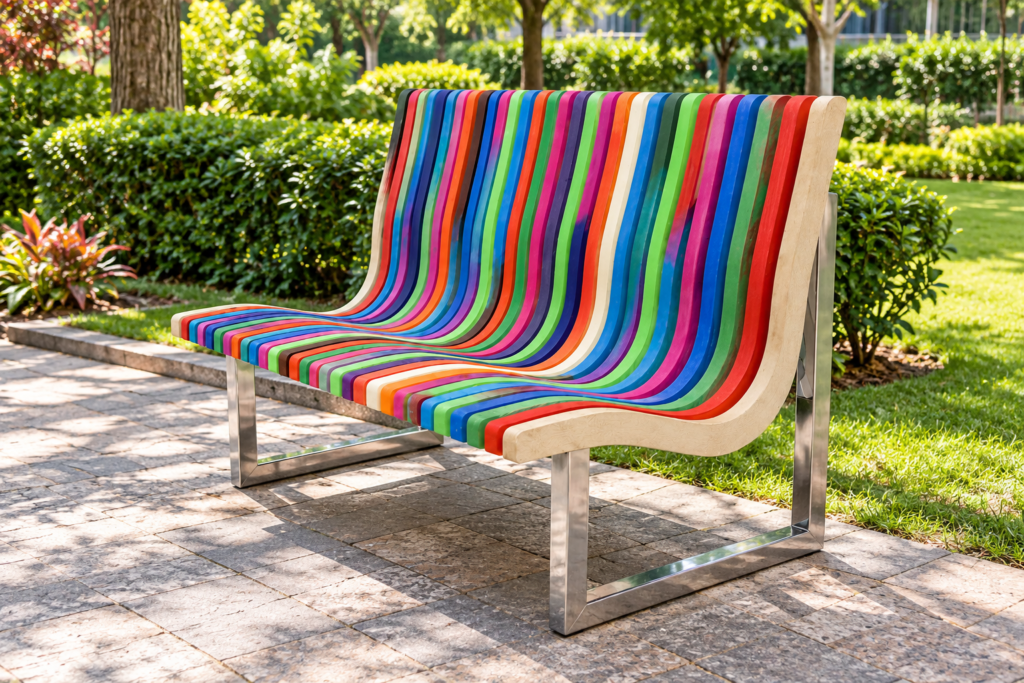
Every park bench starts as something else. For a recycled plastic bench, that “something else” is the plastic waste most of us throw away without a second thought.
Quick answer: A recycled plastic bench is made by collecting and sorting plastic waste, cleaning and shredding it, melting it into beams, and assembling those beams into a bench. The result is a weatherproof, termite-proof seat that needs very little maintenance. Carbon Fusion lists its 5-foot EcoBench as diverting about 28 kg of plastic.
What you’ll learn in this article:
- What a recycled plastic bench is and what it is made of
- Why these benches suit Indian parks, schools and campuses
- The six steps from plastic waste to finished bench
- Types of benches and their benefits
- Mistakes to avoid when buying, plus answers to common questions
Contents: What is a recycled plastic bench | Why it matters | How it is made | Types and benefits | Mistakes and FAQs | Conclusion
Looking for benches for a park, school or campus? Browse our benches and seating collection to see current designs.
What Is a Recycled Plastic Bench?
A recycled plastic bench is outdoor seating made from post-consumer or industrial plastic waste instead of wood or metal. The plastic is processed into solid beams, sometimes called plastic lumber, which are then fixed to a frame or assembled into a self-supporting structure.
The raw material can include common plastics such as HDPE, PP and LDPE, as well as multi-layered plastic (MLP) packaging that is hard to recycle in other ways. Carbon Fusion’s MLP recycled plastic bench, for example, is built from MLP beams rather than timber.
There is no wood to rot, no steel to rust and nothing to repaint every year.
Why Recycled Plastic Benches Matter
Three reasons explain why more parks, schools and housing societies are choosing them.
1. They keep plastic out of landfills. Each bench puts a measurable amount of waste to long-term use. India’s Plastic Waste Management Rules, 2016 set the framework for how plastic waste is collected, managed and recycled, and products made from recycled plastic are a practical way to close that loop.
2. They handle Indian weather. Monsoon rain, summer heat and termites are the usual reasons outdoor benches fail. Plastic does not absorb water, does not rust and is not a food source for termites.
3. They cost less to maintain. Wooden benches need sanding, sealing and repainting. Metal benches need anti-rust treatment. A plastic bench usually needs only a wash.
Planning a bulk order or a CSR project? Talk to the Carbon Fusion team about quantities, colours and delivery.
How a Recycled Plastic Bench Is Made: Step by Step
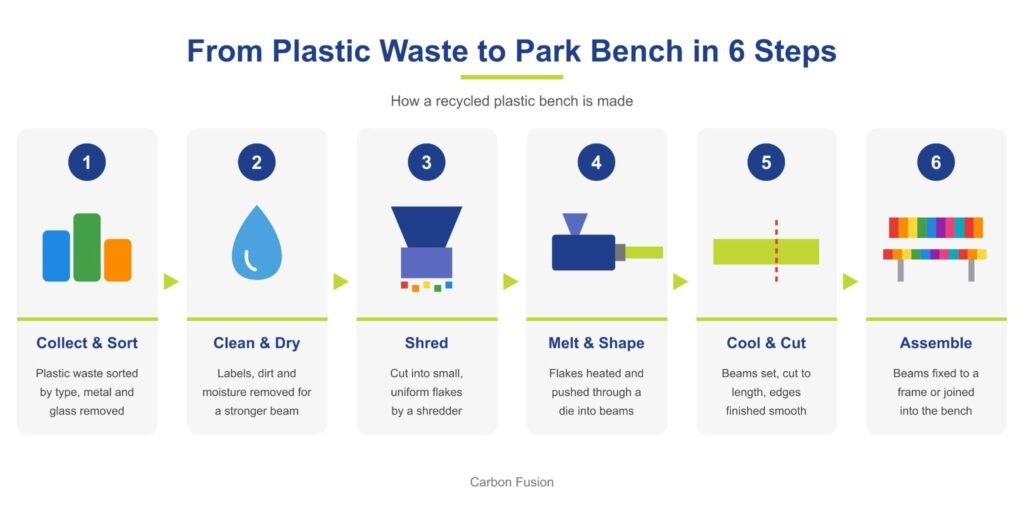
The exact process varies by manufacturer and machine setup, but most recycled plastic benches follow the same six stages.
Step 1: Collect and Sort the Plastic Waste
Plastic arrives from collection points, factories or packaging waste streams. It is sorted by type, because different plastics melt at different temperatures and should not be mixed carelessly. Sorting also removes metal, glass and other contaminants.
Step 2: Clean and Dry
Labels, dirt, food residue and moisture are removed. Clean, dry plastic produces a stronger and more consistent final beam, so this step directly affects bench quality.
Step 3: Shred Into Flakes
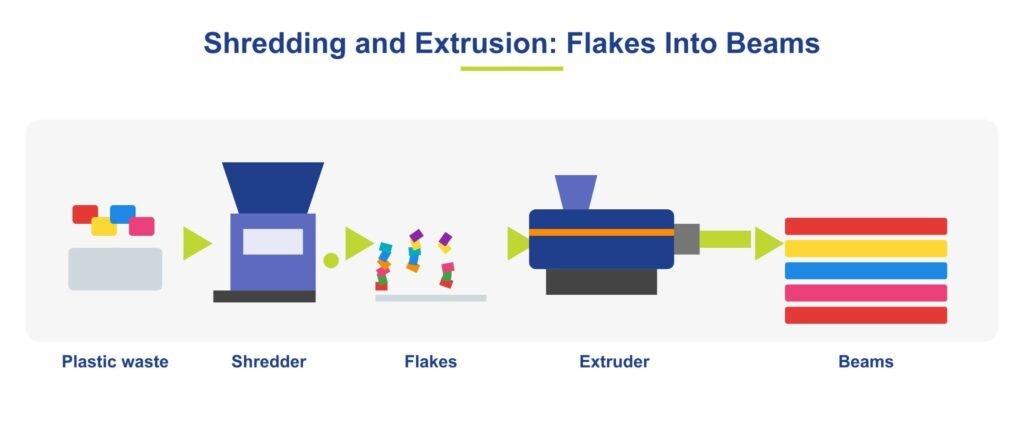
Bulk plastic is fed into a shredder and cut into small, uniform pieces. Recycling units typically use a plastic shredder machine built for HDPE, PP and LDPE. Smaller workshops may start with a tabletop shredder.
Step 4: Melt and Shape Into Beams
The flakes are heated until they soften, then pushed through a die or pressed into a mould to form long solid beams. Many recycling setups use plastic extrusion machines for beam profiles.
Step 5: Cool, Cut and Finish
The beams cool and set, then are cut to length. Edges are finished so the surface is smooth and safe to sit on. Colour is added at the melting stage, which is why recycled benches can be green, blue, multicoloured or branded.
Step 6: Assemble the Bench
Beams are fixed to a frame or joined into the final seat and back. One example is Carbon Fusion’s MLP bench, which uses 10 plastic beams.
| Specification (3 x 5 ft MLP bench) | Detail |
|---|---|
| Seating capacity | 3 persons |
| Dimensions | 70 x 19 x 35 inches |
| Seat height | 17 inches |
| Plastic beams | 10 |
| Plastic used | about 32 kg |
| Bench weight | about 54 kg |
Specifications are taken from the product listing. Confirm against the current product page before publishing.
Types and Benefits of Recycled Plastic Benches
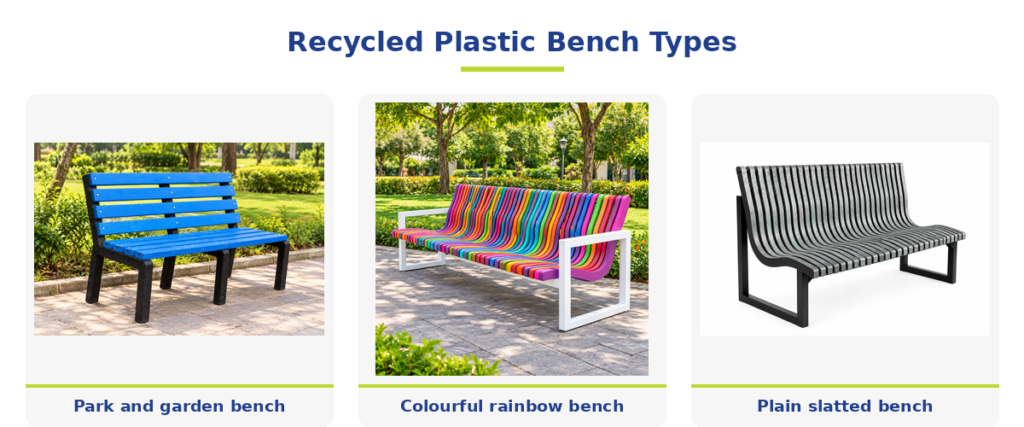
Common Types
- Park and garden benches: the classic eco bench and the recycled plastic outdoor bench
- Colourful designs: the rainbow bench for playgrounds and public spaces
- School benches: the school desk bench with attached table and storage shelf
- Branded benches: custom-branded recycled plastic benches for companies, campuses and events
- Dining sets: the picnic table set for parks and gardens
Key Benefits
- Weatherproof: handles rain and heat without warping or rotting
- Termite-proof and rustproof: no wood to eat, no metal to corrode
- Low maintenance: an occasional wash replaces painting and sealing
- Customisable: colours and branding can be built into the material
- Sustainable: gives plastic waste a long second life
- Recyclable again: plastics of this kind can generally be reprocessed at end of life
Common Mistakes When Buying Recycled Plastic Benches
- Choosing on price alone. Ask what plastic the bench is made from and how thick the beams are.
- Ignoring UV and heat performance. Outdoor benches should be rated for sun exposure. Dark colours can feel warm in direct summer sun.
- Skipping installation planning. Check whether the bench needs to be anchored to the ground in public spaces.
- Not asking for specifications. Dimensions, weight, seating capacity and plastic content should be stated clearly.
- Forgetting bulk and branding needs. Decide colours and logos before ordering so everything arrives in one batch.
Frequently Asked Questions
How is a recycled plastic bench made?
Plastic waste is sorted, cleaned, shredded, melted into beams, cooled, cut and assembled into a bench.
How much plastic does one bench use?
It depends on size. Carbon Fusion lists its 5-foot EcoBench as diverting about 28 kg of plastic, and its 3 x 5 ft MLP bench uses about 32 kg.
Are recycled plastic benches durable outdoors?
They are designed for outdoor use, resisting water, rust and termites. Ask the supplier for the plastic composition and care guidance for your climate.
Can I get benches with my logo or branding?
Yes. See custom-branded recycled plastic benches for corporate, campus and event use.
Do recycled plastic benches get hot in the sun?
Any plastic surface can warm in direct sunlight. Lighter colours and shaded installation help.
Conclusion: A Bench That Gives Waste a Second Life
A recycled plastic bench turns collected plastic waste into durable public seating through sorting, cleaning, shredding, melting and assembly. It resists weather and termites, asks little of whoever maintains it, and keeps plastic in use for years.
Ready to choose? Visit our shop, learn about Carbon Fusion, or request a quote for your project.
